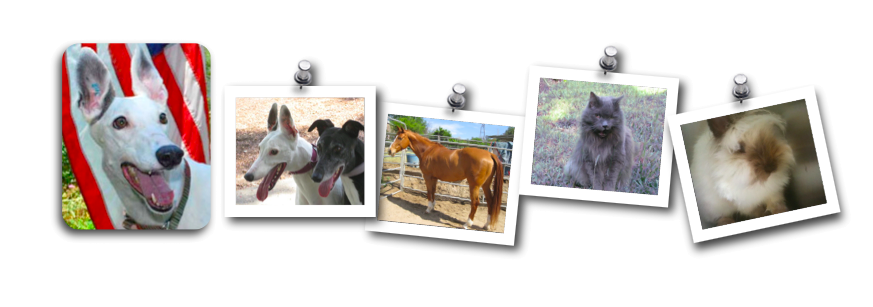
If your animals could talk, what would they say?
Showing posts with label pet care. Show all posts
Showing posts with label pet care. Show all posts
Wednesday, December 15, 2010


Wednesday, December 8, 2010
Myth #8: If “location x” is where it hurts, then thatʼs where you must focus the massage to help.
There are two reasons that massage
attention in other areas of the body may
be more helpful than where it hurts at the
moment.
1. If there is current inflammation and
acute pain in an area, many massage
techniques would simply irritate the area
further and be counterproductive, or even
outright harmful. (However, some
techniques, such as lymphatic drainage
massage or acupressure, may still be
quite helpful!)
2. Very often the location of pain is not the location of the restriction that is
causing the pain. That is, a tightness or an adhesion, some form of a
restriction somewhere else in the body, may be (and likely is) pulling on
"neighbors", resulting in pain where sensitive structures are being stressed
by the pull. Over time, the patterns of tension, along with the body's efforts
to compensate, can create very elaborate and unique patterns of restriction.
This means that any pain could potentially have it's root cause virtually
anywhere in the body, and part of the process of receiving bodywork over
time is unraveling these layers that eventually led to the symptoms. (Why
don't the symptoms just appear right away? Because we and our animals, are
so good at compensating and adapting. Much more on this in Chapter 4:
Adaptation vs. Healing in The Dog Lover's Guide to Massage and The Horse
Lover's Guide to Massage.)
Thursday, November 11, 2010
Friday, October 29, 2010
All About Animal Massage
All About Animal Massage
Massage and bodywork can contribute significantly to your animal’s ease of movement, health, and quality of life. In addition to reducing muscle soreness, deepening your relationship, and providing well-deserved pampering, massage can also:
- Boost the immune system
- Improve the quality and symmetry of movement
- Support better joint health and function
- Promote earlier detection of stresses and strains
- Stimulate circulation for greater health of all tissues
- Help reduce risk, severity, and frequency of injuries
- Improve athletic agility and coordination
- Reduce the effects of stress
- Minimize restrictions caused by old scar tissue
- Reduce or eliminate adhesions, knots, and other restrictions
- Improve skeletal alignment for more efficient movement
- Release endorphins (natural pain killers)
- Lower blood pressure
- Improve digestion
Wednesday, October 13, 2010
Euthansia: a hard decision
By the time I decided to have Mica euthanized, I wondered why I had let him suffer so long. He looked awful, as he went from one water source to another, covered with drool. When he leaned over the swimming pool, I grabbed him and said to myself: "What am I waiting for?"
Our vet sent us a plant to memorialize Mica!

Mica brought us loyal companionship for nearly 2 decades. Having a living plant to memorialize him gives his life some dignity, as he did indeed bring some good to the world.
Wednesday, October 6, 2010
Mica had to go to the vet today
A sore on his mouth has been diagnosed as a cyst. It is very uncomfortable and thus he is loosing weight, as it is difficult for him to eat. A shot of fluids and a shot for the infection; and he seemed to improve right away.
Saturday, September 25, 2010
Watch this video demonstrating heat stroke prevention
This short video covers the basics of heatstroke prevention. The dangers are underestimated, as animals who survive may have permanent damage.
Wednesday, September 22, 2010
Cushings disease may be hard to identify
Sometimes a few symptoms are hard to follow to the true source of problems. This explanation of Cushings disease is very thorough and understandable. I hope it is helpful but not relevant to your own pet. I found it at Dr Mercola's website:
Hi, this is Dr. Karen Becker, and today we’re going to discuss Cushing’s disease. This is the first of a three-part series.
Cushing’s disease was originally diagnosed by Dr. Harvey Cushing in 1932, hence the name. I prefer the correct title of what’s happening to this syndrome: hyperadrenocorticism, which is a bigger much more descriptive word. It means “hyper” or too much, “adreno” referring to the adrenal gland, and “cortisol” or what exactly the syndrome dictates. It’s too much adrenal release of the hormone cortisol.
What Cortisol Does to Your Pet’s Body
Cortisol is your pet’s “fight or flight” hormone. It is designed to be released by your pet’s adrenal glands in very small amounts. When there’s an up-regulation of cortisol demand, your pet can begin producing cortisol in high amounts. This can be toxic to the body.
Cortisol is a very important hormone, it’s part of your pet’s fight-or-flight response, and cortisol is designed to be released in small amounts from the adrenal glands when the body perceives stress. Ultimately speaking, the end result of cortisol release is glucose release from the liver.
Glucose, being sugar, is what provides energy to the muscle cells so that your pet is able to escape a bear, or for a kitten to run up a tree when chased by a dog. It helps your pets ready their bodies either to address confrontation or be able to get away in a life-threatening situation. That’s the big reason why pets release cortisol.
However, cortisol influences a whole host of other biochemical parameters. It influences the body in a whole host of negative ways. Cortisol is also linked to regulation of blood pressure. It can negatively influence electrolyte balance. It is immunosuppressive, so it can negatively impact your pet’s immune system in the long term. It has a negative interaction between bone and fat metabolism.
Needless to say, we’re thankful that cortisol is in our pets’ bodies in small amounts. The goal is to help your pets not over secrete cortisol, which becomes a toxic situation.
Chronic cortisol release translates to chronic signs of stress in your pet. Keep in mind there’s no such thing as good or bad stress for your pet. It’s all stress, so your pet is having the samephysiologic response whether you’re dropping them off at the groomer, they’ve been hit by a truck, they’re all excited that your serving them steak for your birthday dinner, there’s divorce or a new dog in the family, they have a large wound, or they’re dealing with the inflammation of cancer or allergic response. Those are all the same stress.
If you’re thinking, “My pet doesn’t really have stress. I’m moving from place to place, and he travels with me all the time in a brand-new environment,” then that’s still considered a type of stress on your pet’s body.
Thursday, September 16, 2010
Dog food ingredients may be excellant but not meet your dog's needs
Every food contains a different ratio of macronutrients – protein, fat,
and carbohydrates – and you have to learn by trial and error which ratio
works best for your dog. Each product contains varying amounts of
vitamins and minerals, and though most fall within the ranges considered
acceptable by the Association of American Feed Control Officials
(AAFCO), some may be in excess of, or deficient to your dog’s needs.
How to choose the best dog food for your canine friend.
At our home, we have two heavy golden retrievers who eat any and everything. Meanwhile, a stray table scrap for our two greyhounds would have nasty consequences (loose stools). I know that Whole Dog Journal rates dog foods, so I turned to their archives for some good insight on dog food. I was impressed to find that they start by stating that you, the owner is the best qualified to pick the food for your dog. There is not a one brand fits all solution. Here is a snippet from their July 2005 issue:
" But dogs, just like people, are individuals. What works for this dog
won’t work for that one. A Pointer who goes jogging with his
marathon-running owner every day needs a lot more calories than the
Golden Retriever who watches TV all day. The diet that contains enough
fat to keep that sled dog warm through an Alaskan winter would kill that
Miniature Poodle who suffers from pancreatitis. The commercial kibble
that stopped my Border Collie’s itching and scratching in its tracks may
cause your Bedlington Terrier to develop copper storage disease.
Thursday, September 9, 2010
Periodontal Disease
From an article by Dr Karen Becker at MercolaHealthyPets.com
Periodontal Disease
Periodontal disease is an infection of the tissues surrounding the teeth that takes hold in stages, in much the same way as with you and me.It starts out with formation of a bacterial film on the teeth called plaque. When the bacteria die, they become calcified by calcium in saliva, forming a hard, rough substance called tartar or calculus. This then provides a substrate upon which more plaque can accumulate.If left to spread, plaque can lead to inflammation of the gums, causing them to be red and swollen and bleed easily, a condition known as gingivitis. If tartar buildup continues unchecked, infection can form around the roots of the teeth and below the gum line.In the final stages of periodontal disease, the tissues surrounding the teeth are destroyed, the bony socket holding the tooth erodes and the tooth becomes loose. This is a very painful process for your pet -- but fortunately, it is preventable.You can easily avert these problems before they start.
Tuesday, August 10, 2010
Air Travel Tips
Top 10 Tips for Safe Air Travel with Your Pet
 Traveling can be highly stressful, both for you and the four-legged
members of your family. But with thoughtful preparation, you can ensure
a safe and comfortable trip for everyone.
Traveling can be highly stressful, both for you and the four-legged
members of your family. But with thoughtful preparation, you can ensure
a safe and comfortable trip for everyone.
The ASPCA urges pet owners to think twice about flying their pets on commercial airlines, especially if they plan on checking them in as cargo.
Unless your animal is small enough to fit under your seat and you can bring him or her in the cabin, the ASPCA recommends pet owners to not fly their animal. If pet owners have already committed to transporting their pets on commercial airlines, the ASPCA is offering the following top ten tips for safe air travel with your pet:
The ASPCA urges pet owners to think twice about flying their pets on commercial airlines, especially if they plan on checking them in as cargo.
Unless your animal is small enough to fit under your seat and you can bring him or her in the cabin, the ASPCA recommends pet owners to not fly their animal. If pet owners have already committed to transporting their pets on commercial airlines, the ASPCA is offering the following top ten tips for safe air travel with your pet:
- Make an appointment with your pet's veterinarian for a checkup, and
make sure all vaccinations are up-to-date. Obtain a health certificate
from your veterinarian dated within 10 days of departure. For travel
outside of the continental United States, additional planning and
health care requirements may be necessary. Contact the foreign office
of the country you are traveling to for more information.
- Make sure your pet has a microchip for identification and is
wearing a collar and ID tag. Breakaway collars are best for cats. The
collar should also include destination information in case your pet
escapes.
- Book a direct flight whenever possible. This will decrease the
chances that your pet is left on the tarmac during extreme weather
conditions or mishandled by baggage personnel.
- Purchase a USDA-approved shipping crate that is large enough
for your pet to stand, sit and turn around in comfortably. Shipping
crates can be purchased from many pet supply stores and airlines.
- Write the words "Live Animal" in letters at least one inch
tall on top of and at least one side of the crate. Use arrows to
prominently indicate the upright position of the crate. On the top of
the crate, write the name, address and telephone number of your pet's
destination point, and whether you will be accompanying him or if
someone else is picking him up. Make sure that the door is securely
closed, but not locked, so that airline personnel can open it in case
of an emergency. Line the crate bottom with some type of
bedding—shredded paper or towels— to absorb accidents.
- Affix a current photograph of your pet to the top of the crate
for identification purposes. Should your pet escape from the carrier,
this could be a lifesaver. You should also carry a photograph of your
pet.
- The night before you leave, make sure you’ve frozen a small
dish or tray of water for your pet. This way, it can’t spill during
loading, and will melt by the time he’s thirsty. Tape a small pouch,
preferably cloth, of dried food outside the crate. Airline personnel
will be able to feed your pet in case he gets hungry on long-distance
flights or a layover.
- Tranquilizing your pet is generally not recommended, as it could hamper his breathing. Check with your veterinarian first.
- Tell every airline employee you encounter, on the ground and
in the air, that you are traveling with a pet in the cargo hold. This
way, they’ll be ready if any additional considerations or attention is
needed.
- If the plane is delayed, or if you have any concerns about the welfare of your pet, insist that airline personnel check the animal whenever feasible. In certain situations, removing the animal from the cargo hold and deplaneing may be warranted.
Tuesday, July 27, 2010
Accupressure for adoption
Combining acupressure with behavioral techniques can help the new dog and the existing pack adapt to and bond with one another. It can also help resident dogs accept the newcomer. It leads to a much shorter period of upheaval and a quicker return to peace in the home.
The new dog has lost his original pack (family); and must learn a new physical environment, food, water, people, and pack.
Offer an accupressure session to the most dominant dog since he will feel the most threatened and resistant to change in pack status.
The new dog has lost his original pack (family); and must learn a new physical environment, food, water, people, and pack.
Offer an accupressure session to the most dominant dog since he will feel the most threatened and resistant to change in pack status.
Wednesday, June 23, 2010
Dangers of raw pet foods: A Better Alternative
Fresh foods fed in variety are without question the perfect form of nutrition. Appropriately designed cat and dog supplements to
help reduce the risk of food-borne pathogens and oxidation, and to help
balance high meat meals and provide a spectrum of vegetable-based
nutrients and nutraceuticals such as Wysong has developed can also be
of great benefit. Anything less than this is a compromise. The next
best alternative is packaged dried raw foods that have incorporated in
them food technology to impede pathogens, parasites and oxidation. The
low water activity of these products is a great inhibitor of pathogens
and the low level of moisture make storage and shipping efficient and
environmentally friendly. (See our Wysong TNT™ raw dog and cat foods .) Good quality table scraps and properly designed dry pet foods and canned pet foods can be mixed into the diet rotation with benefit as well.
Consumers must learn the principles of fresh foods fed in variety and to trust in nature. Every pet owner desires the best for their pet and they are correct in thinking food is an essential element in achieving that goal. But it is incorrect to believe that another person can do more for their pet’s health than they can do themselves. All that is required is a little understanding and use of common sense. To that end we provide a free e-Health Letter, a free one-hour CD by Dr. Wysong entitled, “The Thinking Person’s Master Key To Health,” healthy product alternatives designed intelligently with health as the number one objective, and books and recipes for anyone wanting to take control of their own and their family’s and pet’s health destiny so as not be led down health destructive primrose marketing paths.
(Note: Although the authors are associated with the technical development of the Wysong products mentioned above, the reader should not misconstrue the information as a commercial inducement. Wysong will teach people for free how to fresh-food-feed using only products purchased in the meat and vegetable aisles in the grocery. Although Wysong products provide convenient and supplemental alternatives and variety, no Wysong product is required to be purchased in order to achieve this superior method of feeding. The position is taken at Wysong that health professionals [which we are] have an ethical responsibility to help people prevent disease and thus are duty bound to teach people how to not need their services. So that is exactly what we do. Wysong pet products are a mere tool to help people along that path to the ideal goal of health self-sufficiency.)
Consumers must learn the principles of fresh foods fed in variety and to trust in nature. Every pet owner desires the best for their pet and they are correct in thinking food is an essential element in achieving that goal. But it is incorrect to believe that another person can do more for their pet’s health than they can do themselves. All that is required is a little understanding and use of common sense. To that end we provide a free e-Health Letter, a free one-hour CD by Dr. Wysong entitled, “The Thinking Person’s Master Key To Health,” healthy product alternatives designed intelligently with health as the number one objective, and books and recipes for anyone wanting to take control of their own and their family’s and pet’s health destiny so as not be led down health destructive primrose marketing paths.
(Note: Although the authors are associated with the technical development of the Wysong products mentioned above, the reader should not misconstrue the information as a commercial inducement. Wysong will teach people for free how to fresh-food-feed using only products purchased in the meat and vegetable aisles in the grocery. Although Wysong products provide convenient and supplemental alternatives and variety, no Wysong product is required to be purchased in order to achieve this superior method of feeding. The position is taken at Wysong that health professionals [which we are] have an ethical responsibility to help people prevent disease and thus are duty bound to teach people how to not need their services. So that is exactly what we do. Wysong pet products are a mere tool to help people along that path to the ideal goal of health self-sufficiency.)
Dangers of raw pet foods: Quality
In order to make their foods anywhere near affordable, RF pet food producers must search the ingredient market for items that can carry the name of real food but may in fact be only a hollow shell of the real thing. Inferior meat and organ ingredients, heat processed grains and vegetable riffraff (for example “broccoli” on a label may really be broccoli stems – like eating a branch from an apple tree rather than the apple) are used because they are of low cost. That is not to say the marketing brochures and labels do not make it appear as though the brand is not a true gourmet meal. If one reviews the various labels it becomes clear that the race is on to see who can put the fanciest and most exotic ingredients on labels ... as if that is the road to pet health. (It is not.) In a brief ingredient survey this is what we found:
Every manner of “pureed” vegetable Organic beef, rabbit, chicken, turkey, goat, lamb, duck, pork Organic honey Organic papaya, persimmons, blueberries, oranges, apples, pears Organic yogurt Organic alfalfa, millet, quinoa and barley sprouts Wheat grass Nettles Bok choy Cultured kefir Cod liver oil Capsicum Watermelon
The reader is challenged to go to the store and total up the cost of such ingredients. Some of the organic ingredients can cost over $15 per pound. But the RF pet diets containing them can retail for as little as $2-4 per pound. Take away margins for distributors and retail stores and the producer is selling them wholesale for close to a dollar per pound. Now on top of the cost of ingredients is the production, advertising, packaging, freezing and in some cases a sales force making six figures. Something most certainly does not add up. The only thing that can be missing is true ingredient quality. But how can the label say these expensive ingredients are in the food? All the RF pet food producer needs to do is put in pinches of the expensive ingredients just to say they are there.
The only economic hope for a RF pet food producer is to create the perception of “value added.” They simply could not put the costly ingredients in the food to any degree and make a profit for themselves and all the middlemen up and down the chain. The price they would have to charge would be ridiculous. In effect, in order to be successful, producers must become accomplished at propaganda, not health and nutrition.
Consumers interested in cutting through to the truth do themselves and their pets a service by going to the grocery store with a list of the ingredients ostensibly in a RF pet diet. Although some RF diets in the lower price range appear to not be attempting to mislead, consumers should do the math comparing the exotic ingredients in RF pet foods to the prices for the real thing in the store and decide for themselves whether either value or honesty resides in RF pet products.
Subscribe to:
Posts (Atom)