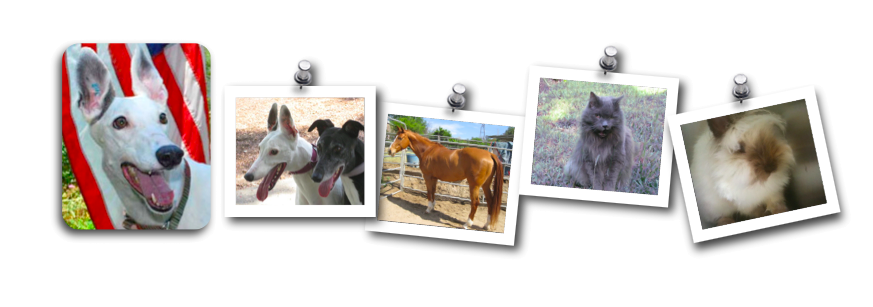
By sharing our concerns and successes, we all benefit.

Animals live to serve us one way or another, so knowing how to take care of them is critical for our mutual well being.
Showing posts with label holistic animal care. Show all posts

Thursday, December 9, 2010

Watch Out for Holiday Dog Hazards

Ten household holiday items that could potentially harm dogs and other pets.


Decorations may set the perfect mood this holiday season, but ornaments, tinsel, and other items can be a recipe for disaster for your furry family members. Veterinarians recommend keeping animals separated from dangerous items in your home, such as the following:
People food and table scraps. “The biggest problems we see over the holidays are emergencies related to table scraps,” explains Dr. David Bessler, emergency medicine clinician at NYC Veterinary Specialists. “Whenever we gather for large family meals, we love to include our pets as part of the family. Great idea, but do it right! Dogs should not be fed fatty ‘people-food’ – not because it will make them fat, but because it can cause vomiting, diarrhea, and pancreatitis, an often fatal disease which claims the lives of thousands of dogs every year.”
Bones. “There is no safe bone,” Bessler says. “Chicken bones, cooked or uncooked, beef bones, and fish bones have all killed dogs. Bones get stuck in the esophagus, stomach, and intestines, and can poke through the walls of those organs, meaning almost certain death. To those people who say, ‘but dogs eat bones in the wild!’ I say, ‘Bones kill dogs in the wild, too.’ A bone that fits down the throat of a wolf does not fit down the throat of a Yorkie.”
Cords and tree lights. Electrocution is prevalent in young animals, such as puppies or kittens, who are more apt to explore objects by mouthing or chewing objects such as electrical cords and tree lights.
Real Christmas trees. “A lot of pet owners are choosing to go with artificial trees,” says Dr. Sonja Olson, head of emergency services at Florida Veterinary Specialists. “It’s not that real Christmas trees are toxic to pets, but tree needles can be irritating and extremely harmful to pets’ digestive tracts when swallowed. Pets also like to drink tree water, which may sort of taste like tea, but it can also be harmful to their digestive tracts, so people have to be sure to cover up the tree water and keep pets from drinking it.”
Ornaments. “The glass tree ornaments look like regular toys to dogs, so they’ll bite into them and get a mouth full of glass,” Bessler says.
Chocolate. “It’s always best to keep a pet away from chocolate,” Bessler says. While it takes a large amount of milk chocolate to make an animal sick, dark chocolate is 10 times more poisonous than milk chocolate.
Potpourri. “Potpourri and especially the oil-based potpourri people often burn over a flame can be very harmful to pets,” says Olson. “Cats will lick it off of their paws and ingest it. This type of oil is a very significant irritant when ingested. It’s important to make sure our pets stay far away from any kind of potpourri.”
Plants. While many holiday plants are not fatally poisonous to animals, poinsettias and holly can cause mouth irritation, drooling, vomiting and diarrhea.
Bread dough and yeast. Dogs may sneak some bread dough meant for holiday treats. In the process of rising, the dough expands in the stomach and the yeast produces ethanol. This can lead to severe problems including alcohol poisoning, stomach distension, and potential bloat.
Tinsel. “Cats will play with tinsel and eat it,” Bessler says. The problem is it can become impacted in their intestines. “Sometimes the strings can cause their intestines to get bunched up into a knot. And, if the problem continues, it can actually saw through the intestines.”
Keeping your dog’s safety and well-being in mind can help ensure that all members of your family have a happy holiday!
Posted 2007 at dogchannel.com

Friday, October 29, 2010

Do you know how to massage your horse?


Give a listen to this podcast by Megan Ayrault, author of the 
Horse Lover's Guide to massage.

http://allaboutequinemassage.com/2010/04/06/listening-with-your-hands-podcast/

Wednesday, September 22, 2010

Blood testing is important to identify Cushings disease


In a continuation about Cushings disease; Dr. Becker explains the importance of blood testing to determine what is going on in your dog.  It is a difficult disease to identify.  

The Importance of Blood Testing
I think it’s important for you to ask for a copy when you have annual blood work done on your dog. I would show the blood work to the pet owners and say, “Look, your dog has had ALP elevation for two or three years,” and their answer would be, “Why didn’t my veterinarian tell me?”
Unfortunately, many reactive veterinarians simply won’t address Cushing’s disease until all of the symptoms are there, or until you begin telling him or her about the symptoms: “My dog’s peeing in the house,” “My dog’s hair is falling out,” or “My dog’s incontinent at night in bed.”
Oftentimes once you start complaining, your veterinarian starts digging. But if you want to be proactive in preventing this disease from occurring, you need to be asking for copies of blood work and why every single blood work value is not balanced or correct.
Your veterinarian needs to partner with you to be able to identify if your dog is at risk of having pre-Cushing’s symptoms, or indeed already cushingoid. So if the ALP value is already elevated in your dog’s blood work, you need to ask your veterinarian if this could be the start of Cushing’s disease.
The diagnosis of Cushing’s disease is difficult. Typically it’s with the blood test. There are two blood tests that many veterinarians will do.
An ACTH stem test is a two-part blood draw that veterinarians will do to diagnose Cushing’s disease, along with a low-dose dexamethasone suppression test. Both of those are two-part – sometimes three-part – blood draws that compare the cortisol levels in your pets’ bodies to be able to make a consistent diagnosis of Cushing’s disease.
After Cushing’s disease has been diagnosed, your veterinarian will want to determine if it’s indeed adrenal or pituitary dependent. In my opinion, the best way to rule out an adrenal tumor is non-invasive ultrasound. Some veterinarians prefer to do a secondary blood test called a high-dose dexamethasone suppression test.
It is important to have a definitive diagnosis of Cushing’s and what type, either adrenal or pituitary dependent. This way, your vet will be able to offer you treatment options to the best of his or her ability.

The long term effects of stress on our canine friends


We know a little about the effects of chronic stress on humans.  We really underestimate that, I think.  We often don't  relate a symptom with the true cause, so we treat the symptoms without changing the cause.  That is reactive instead of proactive.  Dr. Becker at Mercola.com further explains the effects of stress on our canine friends.

The Effects of Chronic Stress
Chronic stress – and therefore chronic cortisol release – ultimately results in elevated blood sugar in the long term, which can lead to diabetes. It results in elevated blood pressure, which can be negative for your pet’s cardiovascular system.
There’s also extreme hunger; when your pet’s burning that much blood glucose, then he or she ends up being much hungrier than the average pet. Increased thirst and urination also come about when there’s extra cortisol in your pet’s system.
There’s an accumulation of fat in the abdominal area, as well as thinning skin, poor, thin hair coat, a change in the pigment in the color of your pet’s skin, decreased muscle and bone mass, and increased risk of infection. That infection can come about anywhere, so pets that have chronic cortisol release, and we refer to them as immuno-suppressed, tend to be more exposed to oral, eye, gum, ear, and urinary tract infections. Infection can come about wherever your pet’s body’s weak link is, so it isn’t just in one area.
For animals that have recurring infections – or those that just lag on and on and pets have a hard time getting rid of – you need to think about cortisol influencing your pet’s ability to fight infection.
Types of Cushing’s Disease
There are several forms of Cushing’s disease, and they can become confusing for clients. So I’m going to try spell it out in an easy-to-understand format today. If you have a pet that’s dealing with Cushing’s disease, it’s important for you to know exactly what’s going on. If your pet is currently healthy, I want to help you prevent Cushing’s disease from occurring in your pet.
There are different types of Cushing’s disease because there are several layers of your pet’s adrenal glands. Depending on what layer of your pet’s adrenal gland is overproducing hormone is the type of Cushing’s disease your pet has.Traditionally speaking, the middle layer of your pet’s adrenal gland for typical Cushing’s disease begins overproducing glucocorticoids. The zona fasciculata is the middle layer of your pet’s adrenal glands. When that particular layer of your pet’s adrenal glands overproduces glucocorticoids (which can also be called steroids, cortisol, cortisone, or the synthetic version that veterinarians can give orally, prednisone), it’s called typical Cushing’s disease.
Sometimes veterinarians unknowingly induce Cushing’s disease by giving too-high doses or too long administration courses of oral prednisone therapy. If your pet is on prednisone, that predisposes your pet to acquire Cushing’s disease.
Typical Cushing’s disease is too much cortisol. Atypical Cushing’s disease comes about when the outer layer of the adrenal gland overproduces electrolyte-balancing hormones called aldosterone, or when the inner layer of the adrenal gland begins overproducing sex hormones.
Atypical Cushing’s disease comes about from the outer or inner layer overproducing mineralocorticoids called aldosterone, or sex hormones like estrogen, progesterone and testosterone precursors.
So it’s all very confusing. Traditional or typical Cushing’s disease (too much cortisol in the system) also has two types. There’s adrenal dependent, and there’s pituitary dependent. Hands down, the most common form of Cushing’s disease in pets is the pituitary dependent form. About 85% of dogs that acquire Cushing’s disease acquire the pituitary dependent form.
This means that the pituitary gland – the master gland in the brain – is sending too much stimulating hormones to the adrenal gland, and the adrenal gland is simply responding to the stimulus to produce more cortisol.
In rare or about 15% of cases, the adrenal glands acquire a tumor, and that causes the up- regulation of cortisol production in the body.
Breed Predisposition among Dogs
It’s very rare for cats to acquire Cushing’s disease, which is much more common in dog breeds.
There’s also breed predisposition. The terriers, unfortunately, are predisposed. These include silky terriers, Yorkies, bull terriers, and Boston terriers, as well as poodles, doxies, and the American Eskimo dog, also known as spitz. All these have genetic predisposition to acquire Cushing’s.

Cushings disease may be hard to identify

Sometimes a few symptoms are hard to follow to the true source of problems.  This explanation of Cushings disease is very thorough and understandable.  I hope it is helpful but not relevant to your own pet.  I found it at Dr Mercola's website: 


Hi, this is Dr. Karen Becker, and today we’re going to discuss Cushing’s disease. This is the first of a three-part series.
Cushing’s disease was originally diagnosed by Dr. Harvey Cushing in 1932, hence the name. I prefer the correct title of what’s happening to this syndrome: hyperadrenocorticism, which is a bigger much more descriptive word. It means “hyper” or too much, “adreno” referring to the adrenal gland, and “cortisol” or what exactly the syndrome dictates. It’s too much adrenal release of the hormone cortisol.
What Cortisol Does to Your Pet’s Body
Cortisol is your pet’s “fight or flight” hormone. It is designed to be released by your pet’s adrenal glands in very small amounts. When there’s an up-regulation of cortisol demand, your pet can begin producing cortisol in high amounts. This can be toxic to the body.
Cortisol is a very important hormone, it’s part of your pet’s fight-or-flight response, and cortisol is designed to be released in small amounts from the adrenal glands when the body perceives stress. Ultimately speaking, the end result of cortisol release is glucose release from the liver.
Glucose, being sugar, is what provides energy to the muscle cells so that your pet is able to escape a bear, or for a kitten to run up a tree when chased by a dog. It helps your pets ready their bodies either to address confrontation or be able to get away in a life-threatening situation. That’s the big reason why pets release cortisol.
However, cortisol influences a whole host of other biochemical parameters. It influences the body in a whole host of negative ways. Cortisol is also linked to regulation of blood pressure. It can negatively influence electrolyte balance. It is immunosuppressive, so it can negatively impact your pet’s immune system in the long term. It has a negative interaction between bone and fat metabolism.
Needless to say, we’re thankful that cortisol is in our pets’ bodies in small amounts. The goal is to help your pets not over secrete cortisol, which becomes a toxic situation.
Chronic cortisol release translates to chronic signs of stress in your pet. Keep in mind there’s no such thing as good or bad stress for your pet. It’s all stress, so your pet is having the samephysiologic response whether you’re dropping them off at the groomer, they’ve been hit by a truck, they’re all excited that your serving them steak for your birthday dinner, there’s divorce or a new dog in the family, they have a large wound, or they’re dealing with the inflammation of cancer or allergic response. Those are all the same stress.
If you’re thinking, “My pet doesn’t really have stress. I’m moving from place to place, and he travels with me all the time in a brand-new environment,” then that’s still considered a type of stress on your pet’s body.

Thursday, September 16, 2010

Dog food ingredients may be excellant but not meet your dog's needs

Every food contains a different ratio of macronutrients – protein, fat, and carbohydrates – and you have to learn by trial and error which ratio works best for your dog. Each product contains varying amounts of vitamins and minerals, and though most fall within the ranges considered acceptable by the Association of American Feed Control Officials (AAFCO), some may be in excess of, or deficient to your dog’s needs.

How to choose the best dog food for your canine friend.

At our home, we have two heavy golden retrievers who eat any and everything.  Meanwhile, a stray table scrap for our two greyhounds would have nasty consequences (loose stools).  I know that Whole Dog Journal rates dog foods, so I turned to their archives for some good insight on dog food.  I was impressed to find that they start by stating that you, the owner is the best qualified to pick the food for your dog.  There is not a one brand fits all solution.  Here is a snippet from their July 2005 issue:
" But dogs, just like people, are individuals. What works for this dog won’t work for that one. A Pointer who goes jogging with his marathon-running owner every day needs a lot more calories than the Golden Retriever who watches TV all day. The diet that contains enough fat to keep that sled dog warm through an Alaskan winter would kill that Miniature Poodle who suffers from pancreatitis. The commercial kibble that stopped my Border Collie’s itching and scratching in its tracks may cause your Bedlington Terrier to develop copper storage disease.

Wednesday, June 23, 2010

Frozen Pet Foods Can Lead To Acidemia

 – Tissue degradation and oxidation under high heat freezing (above 29° F), which occurs along the supply chain with RF pet products also leads to acidification. Increasing acid consumption can contribute to acidemia that lies at the base of virtually every chronic degenerative disease plaguing modern pets. (See references below.)

Frozen Pet Products Are Not Inert To Degradation

– In frozen storage there is deterioration in organoleptic quality – meat texture, fat turning granular and crumbly, and discoloration. Microbial enzymes also remain active, especially lipases that break down fats increasing their susceptibility to oxidation.

Dangers of raw pet foods: Freezer Burn Indicates A More Serious Problem

– Air reaching the meat surface is the cause for the freezer burns that result in the typical grayish-brown leathery spots. Frozen water on the surface or just beneath it sublimates (from solid state directly to vapor) into the air, causing moisture to be lost from the meat over time resulting in discoloration and a dry, leathery texture. Proper pet food packaging helps maintain quality and prevent freezer burn, however most packaging is permeable to air. The prevalence of freezer burn in RF pet products speaks to the fact that the product is being oxidized and with that creating free radical toxins to lay the seeds for various degenerative diseases.

Tuesday, June 22, 2010

Dangers of raw pet foods: Free Radical Problems Masked

– Essential fatty acids and other health enhancing lipids are critical in the diet. Once foods are ground, mixed, exposed to air, light and pro-oxidants such as heme iron and other metals found in plant and animal tissue, the contained lipids are oxidized to chain reaction producing free-radicals, causing rancidity and oxidant toxins. Freezing at appropriately low temperatures slows this process but does not stop it. The temperature in conventional freezers used for RF pet foods is not insurance against such oxidation. Because the frozen state masks olfactory detection of rancidity, foods that would be otherwise rejected end up being consumed. The free-radical pathology potential can then work its chronic degenerative disease and immune weakening effects.

Freezing Masks Inedibles

– Raw meat and organ tissue continues to use ATP (source of energy) until it is exhausted and the tissue enters a state of rigor. Endogenous enzymatic activity within the tissue continues to digest the muscle tissue (proteolysis) softening it until it becomes tender and develops the typical palatable taste. This process is retarded by cold. The freezing of properly aged meat presents few problems, however, any residual ATP present in the tissue during freezing will contract the muscle upon thawing resulting in a more unpalatable product. Mixed RF pet foods would hide this problem.

Display Packaging Causes Free Radicals

– Light, as well as air, can promote free radical production. Retail display pet packaging that is clear or light permeable permits light to catalyze the free radical (disease promoting) process.

Friday, May 28, 2010

Acupressure: Points That Heal by Amy Snow

From Animal Wellness Magazine:
Chico went flying off the back porch and landed chin first on the stone below, knocking himself out. The five-month-old yellow Lab had spotted ducks on the pond 50 feet away and in his exuberance forgot that there was an eight-foot drop from the porch to the craggy rocks. Carol, Chico’s guardian, saw him mid-air from the kitchen window and went rushing out to see where he had landed. When she reached Chico, she placed the tip of her thumb just below his nose, right in the middle of his upper lip and pressed gently, then again with a bit more pressure. Chico regained consciousness, wagged his tail, stood up, shook his whole body, and went back to being his happy puppy self.

Luckily for Chico, Carol had attended a canine acupressure clinic a few months earlier where she had learned basic acupressure concepts and had practiced various techniques. One technique included locating the first aid acupressure points for shock, resuscitation and consciousness (Governing Vessel 26, known traditionally as “Middle of Person”).

Acupressure promotes healing in the body by stimulating specific points to resolve blockages. Blockages cause imbalance along energy pathways known as meridians. According to traditional Chinese medicine, when chi, the life force energy, flows smoothly through the meridian pathways of a four-legged or two-legged body, harmony is restored and healing can occur.

Acupressure is perfectly safe, noninvasive, always available, deceptively gentle and extremely powerful. People have been using acupressure to care for animals for at least 4000 years. More than 230 generations have recognized the benefits of this ancient healing art and casework continues to demonstrate that acupressure can enhance overall health and emotional stability. Specifically, acupressure can:

• Relieve muscle spasms

• Strengthen the immune system

• Enhance mental clarity and calmness

• Release natural cortisone to reduce swelling

• Release endorphins that reduce pain

• Remove toxins and increase blood supply to hasten recovery from injuries

Acupressure is particularly beneficial for animals suffering from acute conditions


When Clay found Phoenix, an eight year-old thoroughbred rescued from the racetrack, he was in obvious distress. He was lying down in his stall, sweating and kicking at his sides. Clay checked Phoenix’s gums; they were pale white. His stomach was extremely distended. Colic! This word strikes terror in every horseguardian’s heart. Clay called her vet and he came out immediately to see if he could relieve the horse’s suffering. After administering a pain medication, the veterinarian left, hoping that this treatment would do the trick.

As evening came, Phoenix’s condition worsened. He became still and quiet, seemingly resigned to dying. As a last resort, Clay called her neighbor, Lisa, who has worked with us for years, and she, in turn, called us for help.

Over the telephone we were able to suggest a course of treatment that was either going to have immediate results or not. Lisa performed the treatment and within five minutes, Phoenix was up on his feet and was passing a lot of gas. His gums were pink again and his belly was no longer distended.
*Picture 1 (Governing Vessel 26)
First aid acupressure point for shock, resuscitation and consciousness
Published in the Fall 2000 issue of Animal Wellness Magazine
Natural Health and Nutrition CD This article is available on CD-ROM!

This article is on the Natural Health & Nutrition CD, featuring the first 6 years of Animal Wellness Magazine. Quickly search over 400 articles (1100 pages) by topic, keyword or by issue.
Print the articles you want to keep close or share with friends! PC and Mac compatible.

Order your CD today for only $20!

Blog Archive