Animals need time to adjust to changes. With TLC and consistant gradual changes they will usually do fine. Be patient.
Payson Roundup
Animals need time to adjust to change
Chandra Cushman
October 22, 2010
Here at the Humane Society of Central Arizona, we experience change on a daily basis. The change we see here, though, is positive. It sometimes is not something we notice until a few months have passed; it’s slow change.
Like when a young dog comes in and is so afraid we have to carry him from the car back to the kennel. Then, a few months later, it’s like we are working with a completely different dog.
As time goes by, these fearful dogs begin to trust and love us. They make great strides with manners, socialization and showing their love and appreciation. I’ve had previous adopters tell me that the shelter animal they’ve adopted showed them more affection than previous animals from their past that they bought from a pet store or purchased from a breeder.
Some animals need some time to adjust to the new change in their life after being adopted. With some, shelter life is all they’ve ever known. That’s why the benefits always outweigh the struggles when it comes to adopting a shelter animal. So let me ask you this: Is it time for a positive change in your life?
Many of you know of the newest addition to our family here at the Humane Society of Central Arizona. Her name is Sarah Hock and she is our new executive director. I wanted to sit down with Sarah and ask her some questions that were fun and would help you get a better feel of who she is. So, here we go!
Q: If you could be a dog, what kind would you be?
A: “I wouldn’t, I would be a cat. Cats are intelligent, independent and mischievous.”
Q: What are your immediate and long-term goals for HSCAZ?
A: “My immediate goal is to serve all animals in HSCAZ’s care to the best of our ability. My long-term goal is to do more education and outreach programs in the community in regards to preventative health care, pet responsibilities and the joys of adopting a shelter animal.”
Q: What makes you proud to be part of the family here at HSCAZ?
A: “The opportunity to work with such dedicated staff and volunteers here at HSCAZ.”
Q: What are your favorite music bands?
A: “Jackson Brown, David Bowie, The Pixies and The Constantines.”
Q: How many animals do you have?
A: “I have six cats, all are rescues. The latest addition is a kitten I bottle-fed from just 2 days old.”
Q: What is a common misconception about shelter animals?
A: “That if they are in the shelter system, there must be something wrong with them. We have plenty of healthy, happy animals that have simply had the misfortune of losing their home.”
Q: Aimes is our featured pet of the week. What do you think the ideal home for him would be?
A: “A patient, understanding home that will be willing to work with him. Someone who understands where he came from. Preferably a home with other dogs so he can play and continue to learn how to be a dog.”
AIMES
Aimes came in to the shelter on May 4, 2010. He was a nervous wreck and had to be carried from the car to the kennels in back because he refused to walk on a leash. He was shaking in fear, so thin his ribs were showing and covered in dirt and poop. His future didn’t look too bright, but we wanted to give him a chance.
After just a few days he started to come to the front of the kennel, showing interest in us. I remember washing him off to get rid of all the dirt and seeing that he was actually white underneath, not brown.
We slowly gained Aimes’ trust. With each day that went by we saw more and more progression with him. We had to put a harness on him to get him to go on walks because he refused to walk with just a leash and collar. Our dedicated volunteers were patient while they taught him how to walk on a leash; he probably never had before he came here.
Aimes really started to perk up once he got to go to the play yard and play with the other dogs. He was a little confused at first, not knowing how to play or interact with other dogs, but he sure got the hang of it quick.
Aimes is now house-trained and does well with all dogs and even children. We have taken him to mobile adoption events in the Valley and he does just fine in public. Since he is a Harrier hound mix, his nose tends to lead him while he is on walks and in the yard, so a decent-sized yard and plenty of activity is something he will definitely need.
Watching some of these animals come in and do a complete 180 is something we take pride in. If they can do it for us, they can certainly do it for you, just give it time. Remember, change is good.
Come down and meet our adoptable animals at 812 S. McLane Road. October is the American Humane Association’s Adopt-A-Dog Month®. For one more week, all dog adoption fees are just $25 at the Humane Society of Central Arizona. We have a special discount fee for our senior animals and our Lonely Hearts Club members of just $15. Adult cats are $50 and kittens are $70.
Don’t forget to vote for us every day during the Holiday Shelter Challenge at www.theanimalrescuesite.com!
Originally published at: http://www.paysonroundup.com/news/2010/oct/22/animals-need-time-adjust-change/
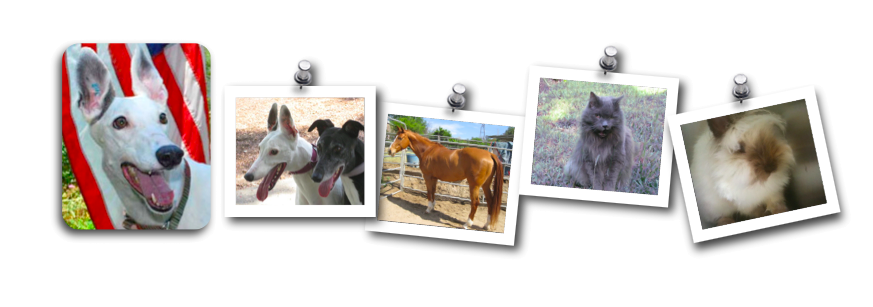
If your animals could talk, what would they say?
Showing posts with label dog food. Show all posts
Showing posts with label dog food. Show all posts
Saturday, October 23, 2010


Thursday, September 16, 2010
Dog food ingredients may be excellant but not meet your dog's needs
Every food contains a different ratio of macronutrients – protein, fat,
and carbohydrates – and you have to learn by trial and error which ratio
works best for your dog. Each product contains varying amounts of
vitamins and minerals, and though most fall within the ranges considered
acceptable by the Association of American Feed Control Officials
(AAFCO), some may be in excess of, or deficient to your dog’s needs.
How to choose the best dog food for your canine friend.
At our home, we have two heavy golden retrievers who eat any and everything. Meanwhile, a stray table scrap for our two greyhounds would have nasty consequences (loose stools). I know that Whole Dog Journal rates dog foods, so I turned to their archives for some good insight on dog food. I was impressed to find that they start by stating that you, the owner is the best qualified to pick the food for your dog. There is not a one brand fits all solution. Here is a snippet from their July 2005 issue:
" But dogs, just like people, are individuals. What works for this dog
won’t work for that one. A Pointer who goes jogging with his
marathon-running owner every day needs a lot more calories than the
Golden Retriever who watches TV all day. The diet that contains enough
fat to keep that sled dog warm through an Alaskan winter would kill that
Miniature Poodle who suffers from pancreatitis. The commercial kibble
that stopped my Border Collie’s itching and scratching in its tracks may
cause your Bedlington Terrier to develop copper storage disease.
Wednesday, June 23, 2010
Dangers of raw pet foods: A Better Alternative
Fresh foods fed in variety are without question the perfect form of nutrition. Appropriately designed cat and dog supplements to
help reduce the risk of food-borne pathogens and oxidation, and to help
balance high meat meals and provide a spectrum of vegetable-based
nutrients and nutraceuticals such as Wysong has developed can also be
of great benefit. Anything less than this is a compromise. The next
best alternative is packaged dried raw foods that have incorporated in
them food technology to impede pathogens, parasites and oxidation. The
low water activity of these products is a great inhibitor of pathogens
and the low level of moisture make storage and shipping efficient and
environmentally friendly. (See our Wysong TNT™ raw dog and cat foods .) Good quality table scraps and properly designed dry pet foods and canned pet foods can be mixed into the diet rotation with benefit as well.
Consumers must learn the principles of fresh foods fed in variety and to trust in nature. Every pet owner desires the best for their pet and they are correct in thinking food is an essential element in achieving that goal. But it is incorrect to believe that another person can do more for their pet’s health than they can do themselves. All that is required is a little understanding and use of common sense. To that end we provide a free e-Health Letter, a free one-hour CD by Dr. Wysong entitled, “The Thinking Person’s Master Key To Health,” healthy product alternatives designed intelligently with health as the number one objective, and books and recipes for anyone wanting to take control of their own and their family’s and pet’s health destiny so as not be led down health destructive primrose marketing paths.
(Note: Although the authors are associated with the technical development of the Wysong products mentioned above, the reader should not misconstrue the information as a commercial inducement. Wysong will teach people for free how to fresh-food-feed using only products purchased in the meat and vegetable aisles in the grocery. Although Wysong products provide convenient and supplemental alternatives and variety, no Wysong product is required to be purchased in order to achieve this superior method of feeding. The position is taken at Wysong that health professionals [which we are] have an ethical responsibility to help people prevent disease and thus are duty bound to teach people how to not need their services. So that is exactly what we do. Wysong pet products are a mere tool to help people along that path to the ideal goal of health self-sufficiency.)
Consumers must learn the principles of fresh foods fed in variety and to trust in nature. Every pet owner desires the best for their pet and they are correct in thinking food is an essential element in achieving that goal. But it is incorrect to believe that another person can do more for their pet’s health than they can do themselves. All that is required is a little understanding and use of common sense. To that end we provide a free e-Health Letter, a free one-hour CD by Dr. Wysong entitled, “The Thinking Person’s Master Key To Health,” healthy product alternatives designed intelligently with health as the number one objective, and books and recipes for anyone wanting to take control of their own and their family’s and pet’s health destiny so as not be led down health destructive primrose marketing paths.
(Note: Although the authors are associated with the technical development of the Wysong products mentioned above, the reader should not misconstrue the information as a commercial inducement. Wysong will teach people for free how to fresh-food-feed using only products purchased in the meat and vegetable aisles in the grocery. Although Wysong products provide convenient and supplemental alternatives and variety, no Wysong product is required to be purchased in order to achieve this superior method of feeding. The position is taken at Wysong that health professionals [which we are] have an ethical responsibility to help people prevent disease and thus are duty bound to teach people how to not need their services. So that is exactly what we do. Wysong pet products are a mere tool to help people along that path to the ideal goal of health self-sufficiency.)
Dangers of raw pet foods: Environmental
We live in an age of pollution and energy diminishment. RF pet foods
require a tremendous amount of refrigeration and equipment all along
the supply path. Freezing is energy inefficient and consumes valuable
energy resources. Since RF pet foods are 70% water (at least) there are
huge resources wasted in freezing and transporting the tons of this
food-contained water through the supply chain. Along with all the
equipment, trucking, freezing and frozen water handling inefficiency
comes the pollution that parallels such industry.
Dangers of raw pet foods: Packaging
The best packaging for any pet food,
particularly RF pet foods, is light- and oxygen-barrier and modified
atmosphere flushed. In the absence of this, oxidation proceeds
rendering the lipids toxic. None of the producers surveyed employed
these technologies that we could detect. Even if they did, the other
problems and dangers listed above would remain.
Dangers of raw pet foods: Parasites Are Ignored
– A wide range of parasites can
be found within RF pet foods. Although there is technology in terms of
freezing and natural ingredients that can be used to thwart this
problem, none of the producers examined employed any of it that we
could detect.
Dangers of raw pet foods: Quality
In order to make their foods anywhere near affordable, RF pet food producers must search the ingredient market for items that can carry the name of real food but may in fact be only a hollow shell of the real thing. Inferior meat and organ ingredients, heat processed grains and vegetable riffraff (for example “broccoli” on a label may really be broccoli stems – like eating a branch from an apple tree rather than the apple) are used because they are of low cost. That is not to say the marketing brochures and labels do not make it appear as though the brand is not a true gourmet meal. If one reviews the various labels it becomes clear that the race is on to see who can put the fanciest and most exotic ingredients on labels ... as if that is the road to pet health. (It is not.) In a brief ingredient survey this is what we found:
Every manner of “pureed” vegetable Organic beef, rabbit, chicken, turkey, goat, lamb, duck, pork Organic honey Organic papaya, persimmons, blueberries, oranges, apples, pears Organic yogurt Organic alfalfa, millet, quinoa and barley sprouts Wheat grass Nettles Bok choy Cultured kefir Cod liver oil Capsicum Watermelon
The reader is challenged to go to the store and total up the cost of such ingredients. Some of the organic ingredients can cost over $15 per pound. But the RF pet diets containing them can retail for as little as $2-4 per pound. Take away margins for distributors and retail stores and the producer is selling them wholesale for close to a dollar per pound. Now on top of the cost of ingredients is the production, advertising, packaging, freezing and in some cases a sales force making six figures. Something most certainly does not add up. The only thing that can be missing is true ingredient quality. But how can the label say these expensive ingredients are in the food? All the RF pet food producer needs to do is put in pinches of the expensive ingredients just to say they are there.
The only economic hope for a RF pet food producer is to create the perception of “value added.” They simply could not put the costly ingredients in the food to any degree and make a profit for themselves and all the middlemen up and down the chain. The price they would have to charge would be ridiculous. In effect, in order to be successful, producers must become accomplished at propaganda, not health and nutrition.
Consumers interested in cutting through to the truth do themselves and their pets a service by going to the grocery store with a list of the ingredients ostensibly in a RF pet diet. Although some RF diets in the lower price range appear to not be attempting to mislead, consumers should do the math comparing the exotic ingredients in RF pet foods to the prices for the real thing in the store and decide for themselves whether either value or honesty resides in RF pet products.
Mycotoxins Go Undetected
– RF pet foods, particularly
those that are a mix of cooked grains (which of course negates the
claim for “rawness”) and vegetables, can contain mycotoxins. None of
the RF pet food producers surveyed addressed this problem.
Dangers of raw pet foods: Microwave Thawing Dangers
– If RF pet foods are thawed
in the microwave as a matter of convenience, the value of the food is
greatly compromised. Microwaves can virtually boil the liquid phase
within cells and electromagnetically alter important food components
rendering them not only useless nutritionally, but toxic as wel
Dangers of raw pet foods: Supply Chain Time Dangers
– Time is the enemy of
nutrition and safety. The longer the time between the farmer’s field
and the belly, the greater the potential problems. RF pet foods create
the illusion that time is not a factor. Because the frozen state masks
toxins and odors, the consumer can be given the impression of value and
freshness when, in fact, they may be getting age and toxicity.
Economics
Consumers are under the mistaken assumption that a nondescript
package mix of ingredients with an officious label and from a producer
posing as a nutritional authority (none of the producers we examined
had people at the helm with expertise or credentials) would be the best
choice. Little do they realize that they could avoid essentially all of
the caveats listed above by simply going to the grocer and buying fresh
meats and produce. Pets do not require every nutrient in existence at
every meal, as is the impression given by the 100% complete RF pet food
producers, and for that matter the rest of the pet food industry. Why
would people choose to pay a producer to mix inferior ingredients,
package them, label them, freeze them, transport them, advertise them
and pay the margin for the producer, the distributor, sales force and
the retailer when they can avoid all that cost and put their money into
real quality fresh foods? Some people are so convinced that RF pet food
manufacturers perform some sort of magic that they will pay to have
such foods put in special insulated containers packed with dry ice and
overnight delivered! This is particularly ridiculous when one considers
that no real convenience – and certainly no health or nutritional value
– is added in the process. The consumer still has to go to the store
and buy something.
At the grocer a person can buy fresh, raw, untainted meats and produce appropriate for pet carnivores at less than $1 per pound. Slightly out-of-date meats, sale items, trimmings or other still excellent products that cannot be put in the meat case can be even less. True, if you are to purchase the ingredients listed above in perfect human grade organic form (as many RF pet food producers boast) the cost could be far greater. But at least you would know what you are getting. RF pet foods can cost as much as $7 per pound with an average of about $3-4 per pound (not including shipping to the customer’s door) and most of that cost is going into freezing, transportation and profits through a whole chain of participants. Here is a case where a consumer gets to pay more (a whole lot more) and get less (a whole lot less).
At the grocer a person can buy fresh, raw, untainted meats and produce appropriate for pet carnivores at less than $1 per pound. Slightly out-of-date meats, sale items, trimmings or other still excellent products that cannot be put in the meat case can be even less. True, if you are to purchase the ingredients listed above in perfect human grade organic form (as many RF pet food producers boast) the cost could be far greater. But at least you would know what you are getting. RF pet foods can cost as much as $7 per pound with an average of about $3-4 per pound (not including shipping to the customer’s door) and most of that cost is going into freezing, transportation and profits through a whole chain of participants. Here is a case where a consumer gets to pay more (a whole lot more) and get less (a whole lot less).
Frozen Pet Foods Can Lead To Acidemia
– Tissue
degradation and oxidation under high heat freezing (above 29° F), which
occurs along the supply chain with RF pet products also leads to
acidification. Increasing acid consumption can contribute to acidemia
that lies at the base of virtually every chronic degenerative disease
plaguing modern pets. (See references below.)
Frozen Pet Products Are Not Inert To Degradation
– In
frozen storage there is deterioration in organoleptic quality – meat
texture, fat turning granular and crumbly, and discoloration. Microbial
enzymes also remain active, especially lipases that break down fats
increasing their susceptibility to oxidation.
Dangers of raw pet foods: Freezer Burn Indicates A More Serious Problem
– Air
reaching the meat surface is the cause for the freezer burns that
result in the typical grayish-brown leathery spots. Frozen water on the
surface or just beneath it sublimates (from solid state directly to
vapor) into the air, causing moisture to be lost from the meat over
time resulting in discoloration and a dry, leathery texture. Proper pet food packaging
helps maintain quality and prevent freezer burn, however most packaging
is permeable to air. The prevalence of freezer burn in RF pet products
speaks to the fact that the product is being oxidized and with that
creating free radical toxins to lay the seeds for various degenerative
diseases.
Tuesday, June 22, 2010
Dangers of raw pet foods: Free Radical Problems Masked
– Essential fatty acids
and other health enhancing lipids are critical in the diet. Once foods
are ground, mixed, exposed to air, light and pro-oxidants such as heme
iron and other metals found in plant and animal tissue, the contained
lipids are oxidized to chain reaction producing free-radicals, causing
rancidity and oxidant toxins. Freezing at appropriately low
temperatures slows this process but does not stop it. The temperature
in conventional freezers used for RF pet foods is not insurance against
such oxidation. Because the frozen state masks olfactory detection of
rancidity, foods that would be otherwise rejected end up being
consumed. The free-radical pathology potential can then work its
chronic degenerative disease and immune weakening effects.
Freezing Masks Inedibles
– Raw meat and organ tissue
continues to use ATP (source of energy) until it is exhausted and the
tissue enters a state of rigor. Endogenous enzymatic activity within
the tissue continues to digest the muscle tissue (proteolysis)
softening it until it becomes tender and develops the typical palatable
taste. This process is retarded by cold. The freezing of properly aged
meat presents few problems, however, any residual ATP present in the
tissue during freezing will contract the muscle upon thawing resulting
in a more unpalatable product. Mixed RF pet foods would hide this
problem.
Dangers of raw pet foods: Raw Frozen Foods Are Not “100% Complete”
– Many RF foods make (or imply) the same spurious 100% complete and balanced pet food claim as heat processed foods and thus carry with them the same health dangers. Feeding any food exclusively, let alone a nondescript packaged food containing who-knows-what from who-knows-what manufacturing environment is a bad choice if health and safety are of concern. (See The Truth About Pet Foods by Dr. Wysong).
Display Packaging Causes Free Radicals
– Light, as
well as air, can promote free radical production. Retail display pet
packaging that is clear or light permeable permits light to catalyze
the free radical (disease promoting) process.
Subscribe to:
Posts (Atom)